
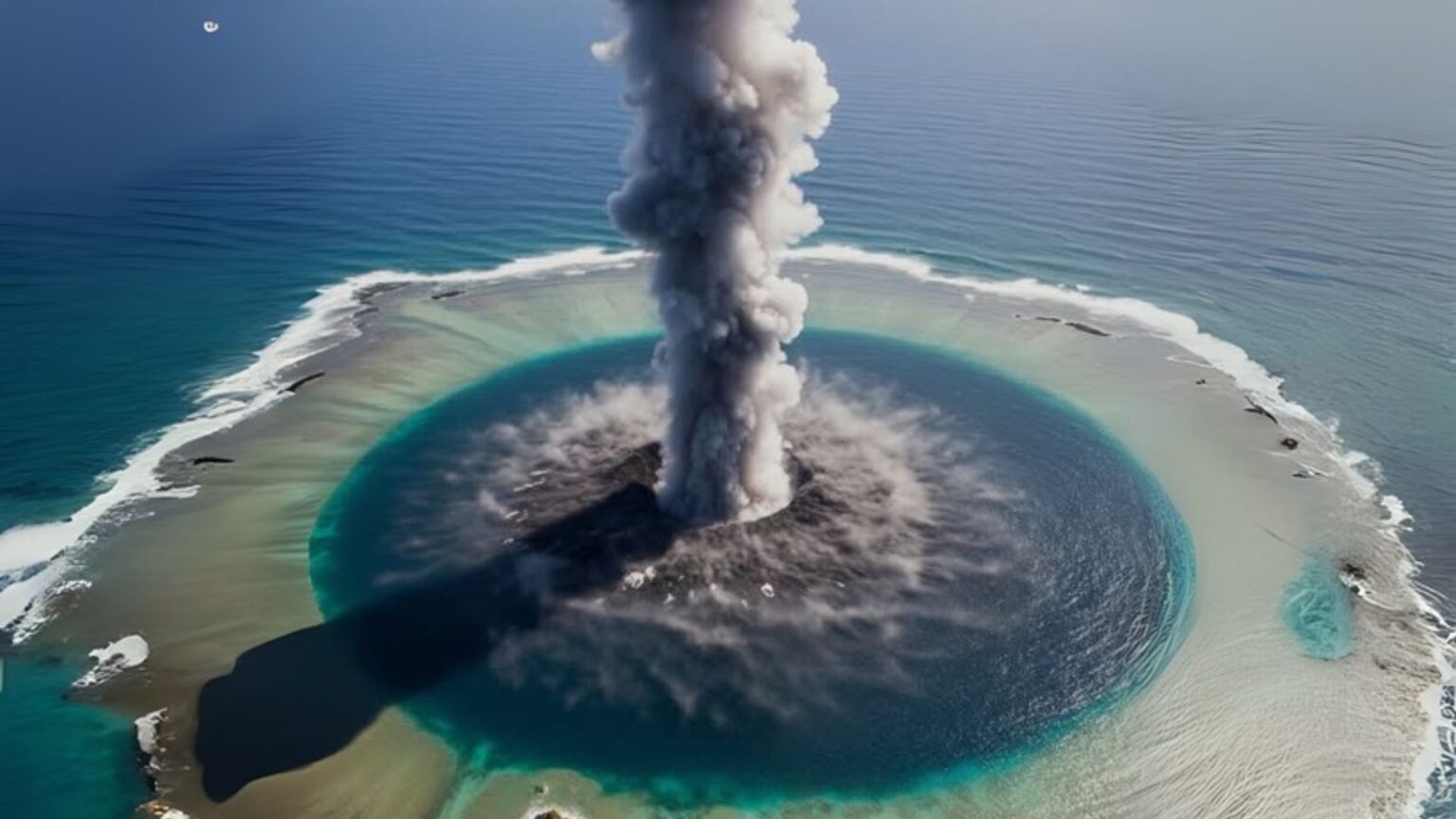
In a dramatic display of nature’s power, a powerful underwater volcanic eruption has created a brand-new island off the coast of Japan. Early Wednesday morning, the waters southeast of Nishinoshima Island in the remote Ogasawara chain began to churn and steam. Moments later, an island erupted from beneath the ocean surface—an explosive event that unfolded in just a few hours.
The newly formed landmass, measuring approximately 660 feet in diameter, was born from molten rock and volcanic ash as it broke through the shallow Pacific waters. Japanese Coast Guard officials, including volcanologist Hiroshi Ito, confirmed the eruption and are closely monitoring the island. While its sudden appearance has sparked international interest, experts caution that the island is extremely vulnerable to erosion. It could solidify and expand over time—like Nishinoshima did in the 1970s—or it may quickly erode and disappear beneath the sea.
What makes this event especially significant is its location within the Pacific Ring of Fire, one of the most geologically active regions on Earth. These volcanic islands form where tectonic plates collide and magma rises to the surface. Japan’s landscape has been shaped by such eruptions for centuries, but the sudden emergence of a new island always draws both scientific attention and public fascination.

Nishinoshima itself grew larger after volcanic activity in the 1970s and eventually merged with another nearby island during a later eruption—raising questions about whether history may be repeating itself.
Whether this newborn island endures or fades back into the ocean, it serves as a striking reminder of our planet’s restless nature. The Pacific Ocean has a new landmark, and scientists around the world are watching closely to see what happens next.