
A Universe Crowded with Galaxies
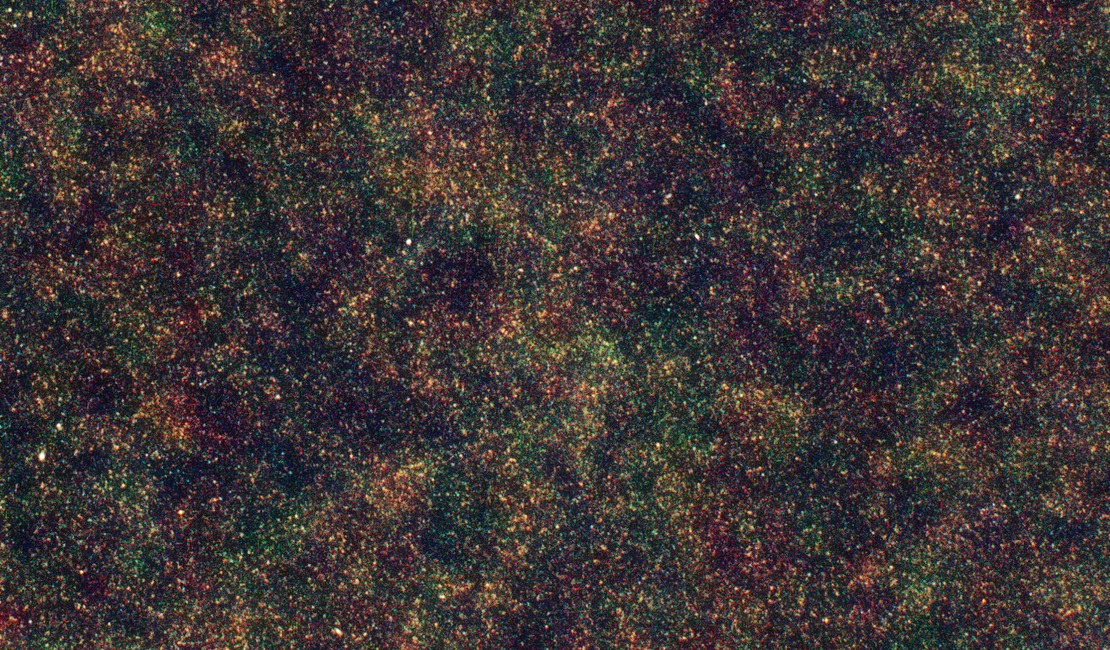
Thousands of galaxies fill the latest Herschel image of the distant Universe. Each tiny dot in this image represents an entire galaxy, each home to billions of stars. The scene reveals a cosmic crowd—galaxies packed so closely together that they appear almost like grains of sand scattered across space.
The Mystery of Luminous Infrared Galaxies
For more than ten years, astronomers have studied unusually bright galaxies in the far reaches of the Universe. These luminous infrared galaxies form stars at rates that challenge established theories of galaxy formation. Their intense brightness has made them the focus of ongoing research into how galaxies are born and evolve.
Herschel’s Breakthrough: Pinpointing Star Formation
ESA’s Herschel infrared space observatory has transformed our understanding of these distant galaxies. With highly sensitive mapping across wide areas, Herschel has identified thousands of these star-forming galaxies, pinpointing their locations and revealing that they tend to cluster together. This clustering, driven by gravity, results in large groups of galaxies. The mottled appearance in Herschel’s images signals these clusters and hints at dramatic galactic collisions.

Galaxy Clusters and Star Formation
Evidence suggests that these galaxies are actively colliding. As they crash into one another, huge bursts of star formation occur, triggered by these powerful encounters. These dynamic processes help explain the unusually high rates of star birth observed in these clusters.
The HerMES Project and the Lockman Hole
This discovery is part of the Herschel Multi-tiered Extragalactic Survey (HerMES) Key Project. Using the SPIRE instrument, HerMES surveys large regions of the sky—now covering 15 square degrees, about 60 times the size of the Full Moon.
The featured image comes from the Lockman Hole, a region in the northern constellation Ursa Major. This area offers a clear view deep into the ancient Universe, making it ideal for studying distant galaxies.
Looking Back in Time
The galaxies captured in this image are so far away that we see them as they were between 10 and 12 billion years ago. Herschel’s colour coding highlights galaxies by their distance and star-forming activity:
- White: Strong in all three wavebands, forming the most stars
- Red: The most distant, seen as they were 12 billion years ago
- Blue/Green: Represent different wavebands and distances
Building a Complete Picture
HerMES will continue surveying new regions, expanding our view of galaxy evolution and interaction over the last 12 billion years. Each image brings astronomers closer to understanding the birth, growth, and clustering of galaxies across cosmic time.
Read more about the Herschel Space Observatory and HerMES here:
ESA Herschel Mission
HerMES Project