
 Scientists may have just found signs of life—on a planet only 124 light-years away.
This could change everything.
In a groundbreaking discovery, scientists using the James Webb Space Telescope have found what may be the strongest evidence yet of life beyond Earth.

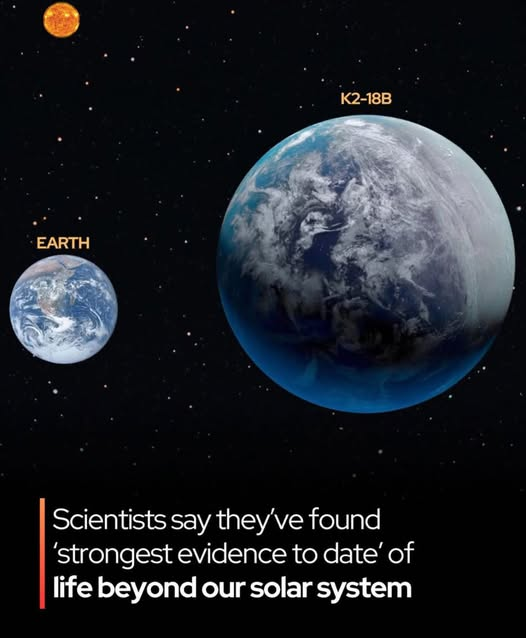
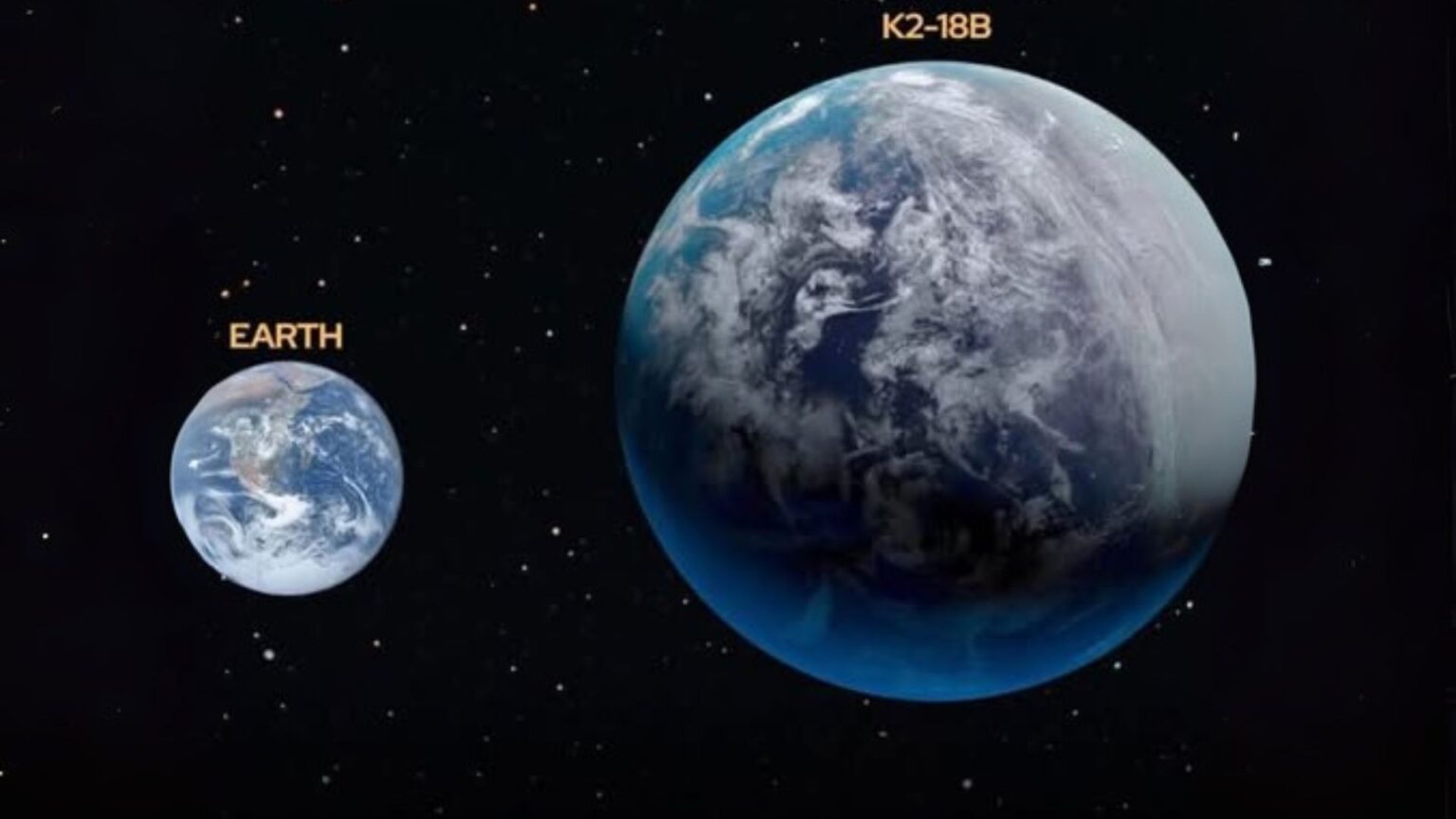
The target is K2-18 b, an exoplanet 124 light-years away, orbiting in the habitable zone of its star. Classified as a “Hycean world”—a planet with a hydrogen-rich atmosphere and a vast liquid ocean—K2-18 b now shows signs of something extraordinary: atmospheric chemicals that, on Earth, are primarily produced by life. Specifically, researchers detected dimethyl sulfide (DMS) and dimethyl disulfide (DMDS), gases linked almost exclusively to marine microorganisms like phytoplankton.
These compounds are considered potential biosignatures—substances whose presence may indicate biological activity. Previous data had already revealed methane and carbon dioxide in K2-18 b’s atmosphere, but the addition of DMS and DMDS brings the possibility of extraterrestrial life into sharper focus. “This is a transformational moment,” said lead scientist Nikku Madhusudhan from the University of Cambridge. While researchers stress that more observations are needed before confirming life, this marks a major leap forward in astrobiology—and a thrilling new chapter in humanity’s search for companionship in the cosmos.
Madhusudhan, N., et al. (2025). James Webb Space Telescope Observations of K2-18 b. Nature Astronomy.