
by Tim Roxborogh
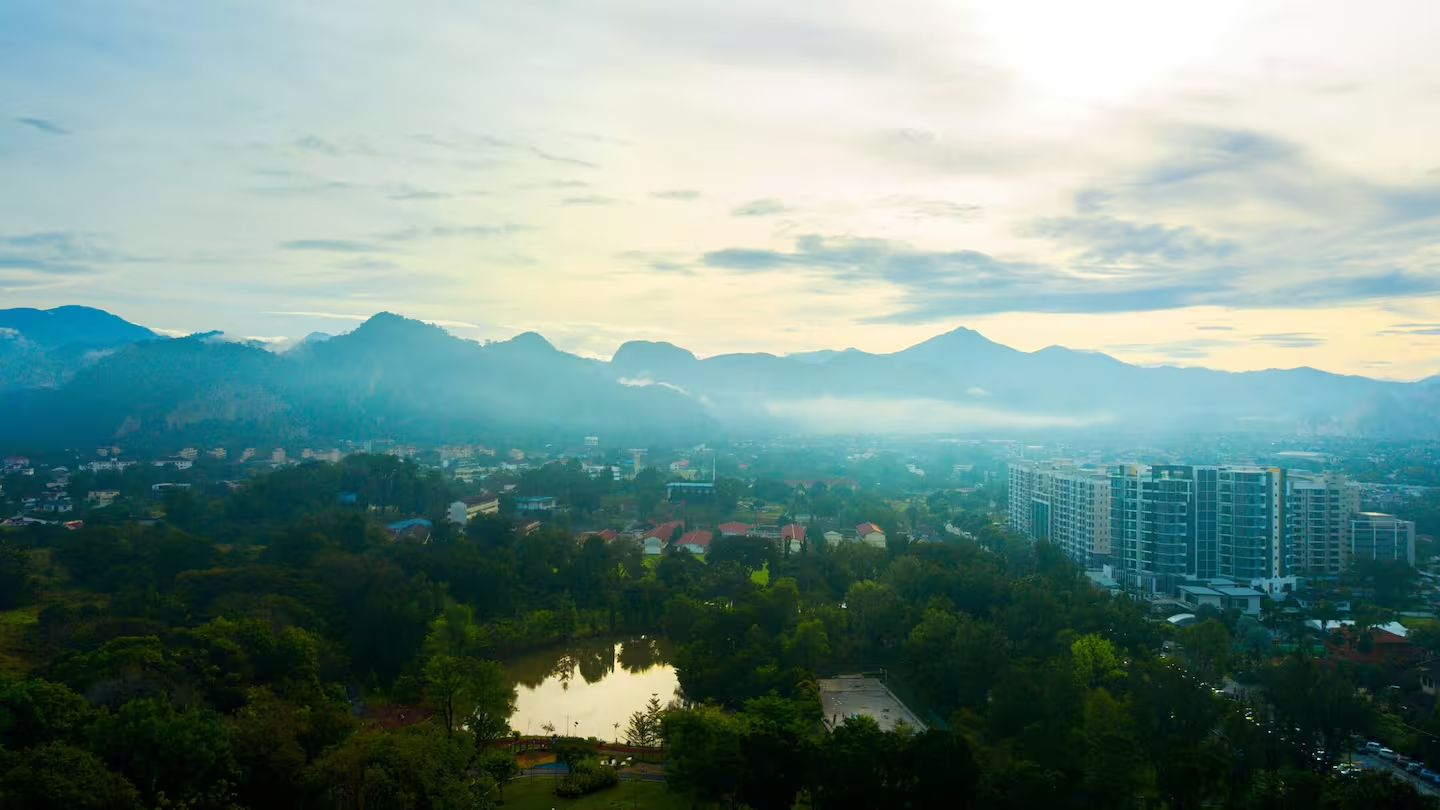
Cradled between limestone mountains and ancient rainforest, Ipoh is a perfect blend of wild beauty and urban charm, writes Tim Roxborogh.
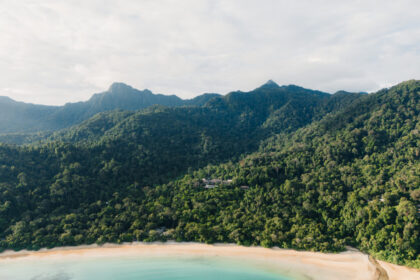
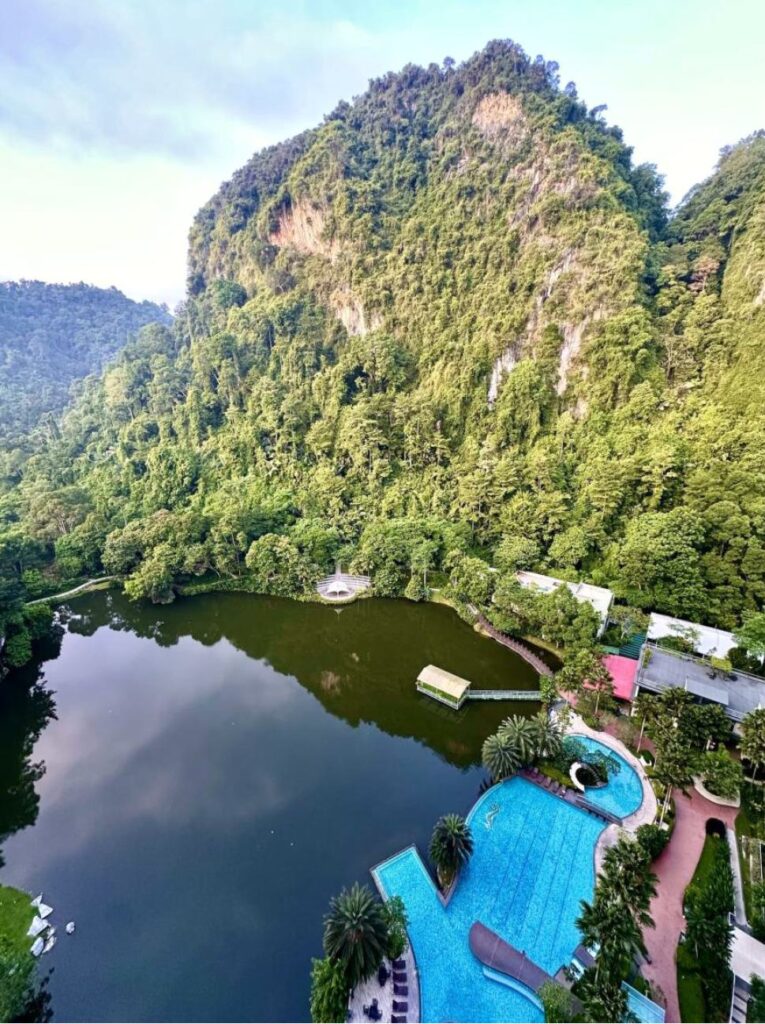
The moment I step out onto my resort balcony and see the view from the 21st floor, I realise this may be the most stunning natural setting I’ve ever stayed in.

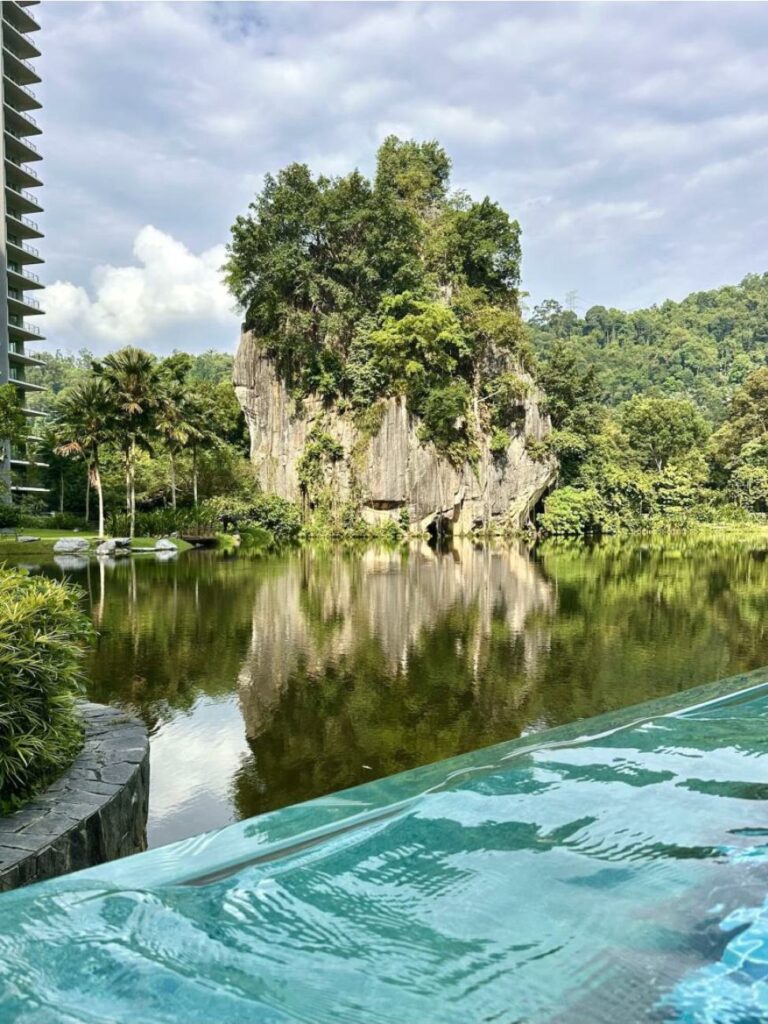
Checking myself for hyperbole and recency bias – and checking again as I write this – I still believe it. A towering wall of 130-million-year-old jungle, draped across jagged limestone peaks, framing a lake where a 280-million-year-old rock juts from its centre. And on the near side of the lake is an enormous infinity pool shaped like a seahorse, next to a floating path leading to a restaurant on a pontoon.
The trees across the lake rustle with monkeys, bird song fills the air and all around is the unmistakable hum of the equatorial jungle. And this really is the jungle. While downtown Ipoh – Malaysia’s fourth-largest city with 900,000 people – is just a 15-minute drive away behind us, if we could look past the hills in front we’d see nothing but untouched rainforest for miles.
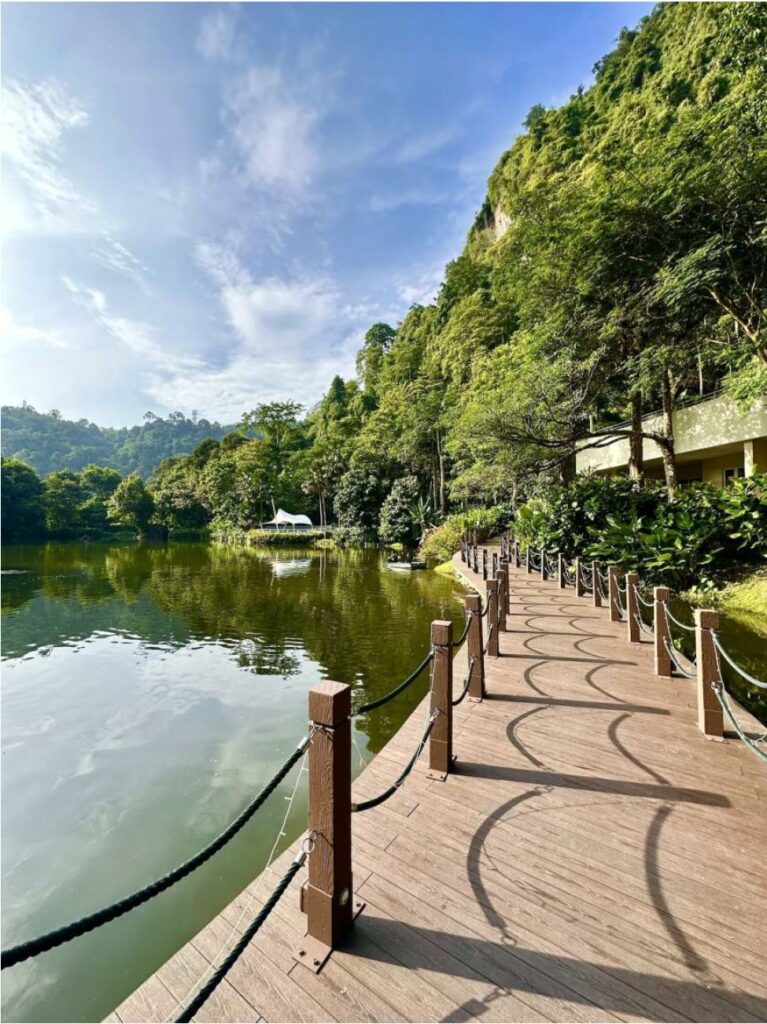
More precisely, it would be about 33km of slow-going jungle-trekking over several days until the trees would briefly part and we’d arrive at the next township. This was why we’d chosen Tui Blue The Haven Ipoh. A resort literally on the edge of the world’s oldest and most biodiverse forest (home to everything from elephants to siamangs, tapirs, hornbills, sun bears and yes, some precious remaining tigers), but also on the edge of one of Malaysia’s most charming cities.
Ipoh sits exactly halfway between the nation’s capital city, Kuala Lumpur (KL), and the famous economic and tourism hotspot of Penang, making it an ideal stop on a Peninsula Malaysia road-trip. However, while those two destinations are on most travellers’ itinerary, Ipoh still flies a little under the radar, but it won’t forever.
You can see this in the proliferation of street art right across Ipoh’s historic central city laneways. You get a sense of a town that’s gentrifying while celebrating its 19th Century origins as the one-time global centre for tin-mining. There are hip cafes everywhere, glorious colonial architecture, and the food – consistently rated as rivalling Penang’s as among the best in Southeast Asia – is extraordinary.
Specifically, Ipoh is known to attract caffeine connoisseurs for its white coffee, while we heard of foodies from KL who plan weekend trips just for the nga choy kai (bean sprout chicken) or the curry mee (noodle soup). Our restaurant at Tui Blue The Haven tops Tripadvisor’s rankings as the single best place to dine in Ipoh, and as our family sat on the pontoon, surrounded by twinkling lights and plates of chicken rice, nasi lemak (creamy coconut rice) and banana split
desserts, we could see why.
The resort setting – that unbeatable setting – is one of Ipoh’s broader calling cards. In the same way Auckland is dotted with dozens of dormant volcanoes, so too is Ipoh’s visual identity inextricably linked to its limestone peaks. No less than 45 limestone hills are found in the Kinta Valley of which Ipoh is a part, and other than luring miners during the city’s formative years, their fantastical caves have long proved irresistible for building places of worship.
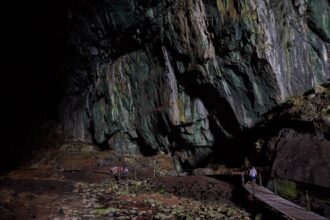
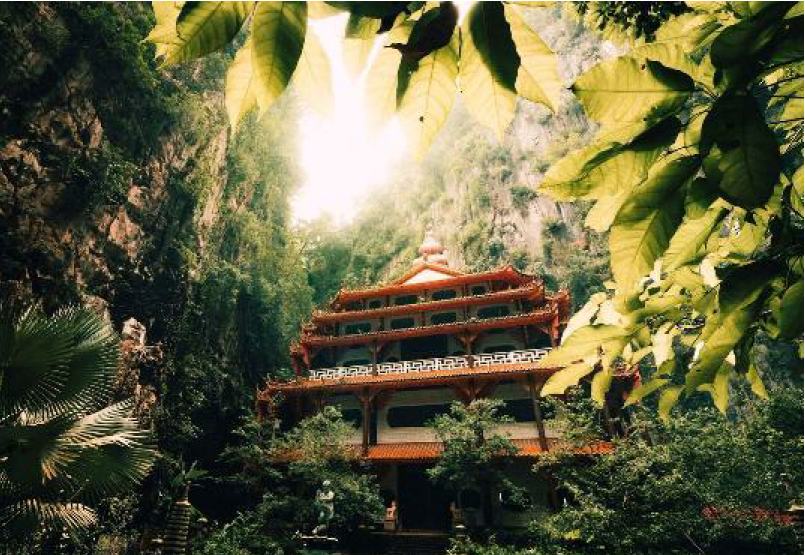
There are as many as 30 cave temples in Ipoh, most established by Chinese immigrants during the tin-mining boom of the late 1800s and early 1900s. This is where you really get to feel like Indiana Jones with the combination of religion, ancient artefacts and the wilds of nature. You could spend an entire Ipoh holiday doing nothing but ticking off different cave temples, but if you’re going to pick just one, Sam Poh Tong Temple had the three generations of our family all gasping in wonder.

Founded by a Chinese monk in the 1890s, the first thing you see is an ornate garden and temple on the hillside exterior, but it’s the five-storey pagoda deep inside the cave in a secret clearing that truly takes the breath away.
We had the same feeling at Tasik Cermin (“tasik” meaning lake). Among other attractions, Tasik Cermin is where you can catch a near-silent, fume-free e-powered inflatable boat through a 130m-long cave tunnel where the reveal is a mirror lake completely hidden from the outside world. Known for centuries only to the animals who live in the dense jungle around these perfectly still waters, Tasik Cermin is, much like Tui Blue The Haven, part of a new wave of eco-centric tourism ventures for Ipoh.
Part of the appeal is the foot in two camps. If you want nature but still with the comforts of a luxurious (yet affordable) resort that’s right close to a major metropolis, Ipoh has you covered. We were hooked.
Three nights at Tui Blue The Haven wasn’t enough to see all that Ipoh offers, but it was enough to know we’ll be back. There are more hills to explore, more cave temples to be awestruck by, more chicken rice to be eaten and probably more corners of that massive seahorse infinity pool to discover too.
The writer travelled as a guest of Tourism Malaysia, Malaysia Airlines and Tui Blue The Haven Ipoh.