
by John Chin
Something special happened in Langkawi last Saturday when, for the first time, geopark operators and advocates were bestowed with awards to mark their adherence to UNESCO geopark status.
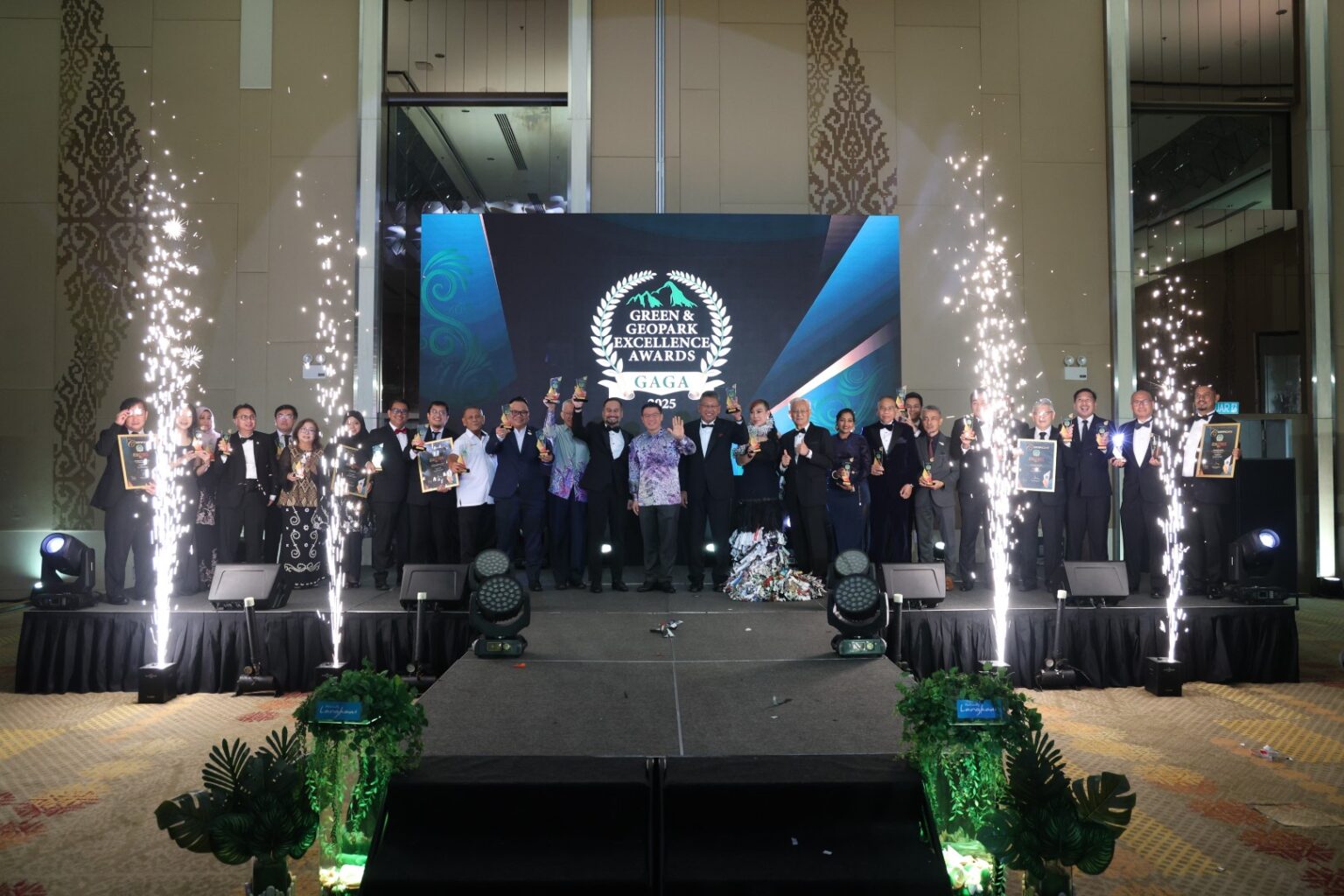
Long envisioned by the Langkawi Development Authority (LADA)’s tourism division manager, the inaugural Green and Geopark Excellence Awards (GAGA) finally made its debut on the island resort.

GAGA was envisioned to help position geoparks on a higher scale of what they represent—sustainability and responsible tourism through eco-tourism outreach.
It is not just about geological heritage or rock fossils, where, incidentally, the oldest fossils in Malaysia are found at Langkawi’s Matchinchang Mountain.

Dr Azmil Munif Mohd Bukhari has witnessed the growth of the UNESCO geopark site status in Langkawi, and he wanted its message of sustainability and community empowerment to reach beyond the island’s shores.
Biodiversity, community engagement, and culture are pillars that hold a geopark high and strong too.
On November 22, this was achieved when 30 award recipients, 100 eco-warriors from the zero waste conference, and 300 celebrants from as far as Sabah and Sarawak gathered to mark the occasion.
Housing and Local Government Minister Nga Kor Ming graced the event and presented the awards.
Among the geopark recipients were Sarawak Delta and Lenggong, while green organisations such as the Penang Green Council and former Penang executive councillor Datuk Seri Phee Boon Poh were also recognised.
On the private sector end, Penang Port Sdn Bhd was among the winners, while Stylo fashion show founder Datuk Nancy Yeoh was recognised for her dedication to sustainable fashion.

As a further impact, Azmil facilitated a strategic partnership of geopark operators and zero waste experts from the region, as well as solid waste management operators.
He also recognised the efforts of zero waste advocates, stating that Langkawi has the potential to become a zero waste network city with high recycling rates and is a work in progress to reduce outright single-use plastics.
The geopark network is also growing in Malaysia, where, after Langkawi, Sarawak Delta and Lenggong in Perak will also achieve UNESCO geopark status.
They are joined by the Kinabalu geopark in Sabah, while the national geoparks now include Lembah Kinta (Perak), Jerai (Kedah), Mersing (Johor), Labuan (Sabah), and Perlis.
Zero waste is one of the fast-growing initiatives to link sustainability with the circular economy.
It empower communities to reduce reliance on plastics, promote composting practices, and decentralise solid waste collection.
Zero waste initiatives also reduce the costs of managing waste, and dispel the belief that high-tech solutions such as incineration are the most effective path forward.