
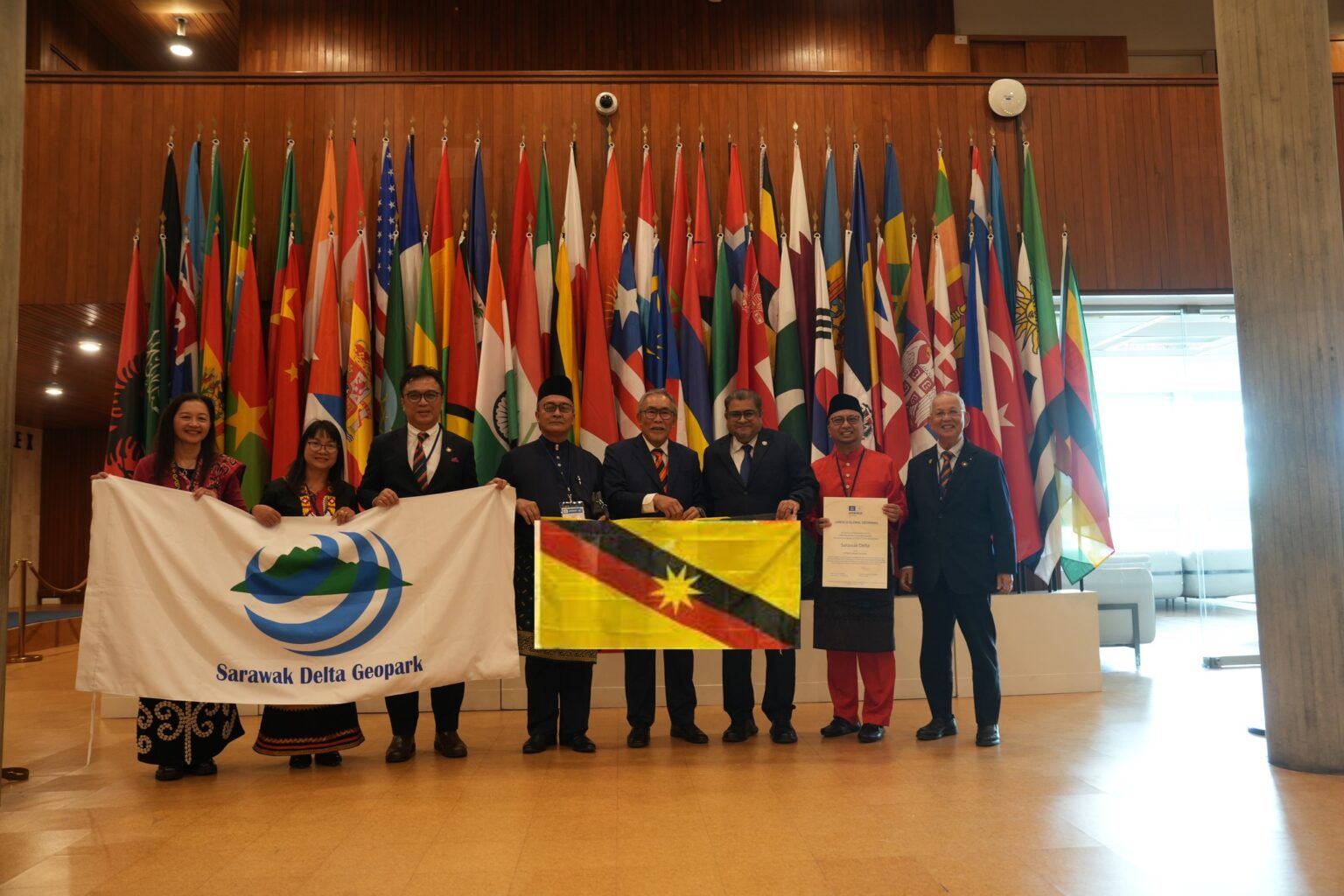
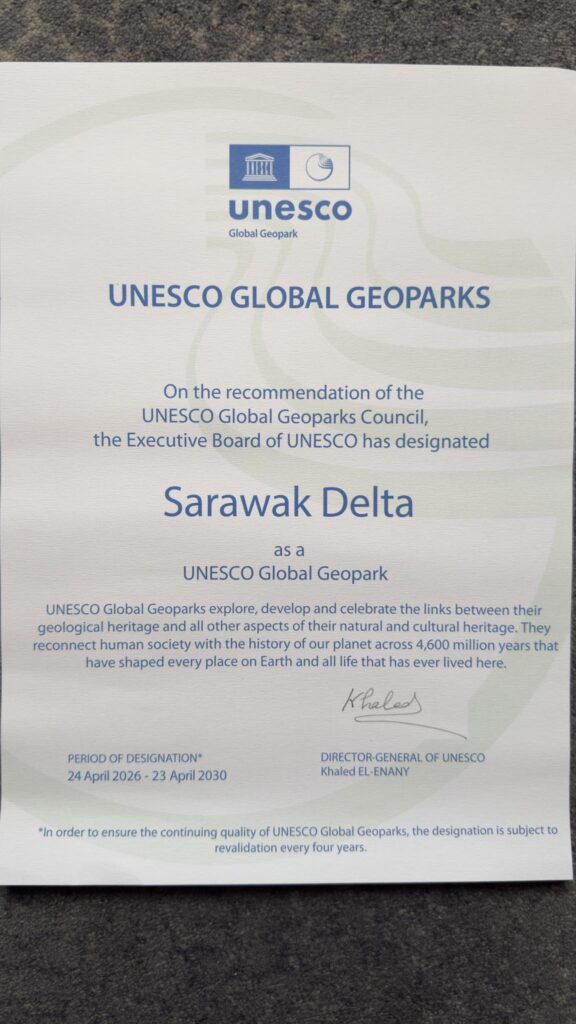
UNESCO has officially recognised the Sarawak Delta Geopark as a UNESCO Global Geopark, placing the region among a select group of sites acknowledged for their geological significance and commitment to sustainable development.
The designation covers an area of 3,112 square kilometres, spanning both land and sea across Kuching Division and part of Serian Division. It marks a milestone in Sarawak’s long-term efforts to conserve its natural landscapes while supporting local communities through responsible tourism.
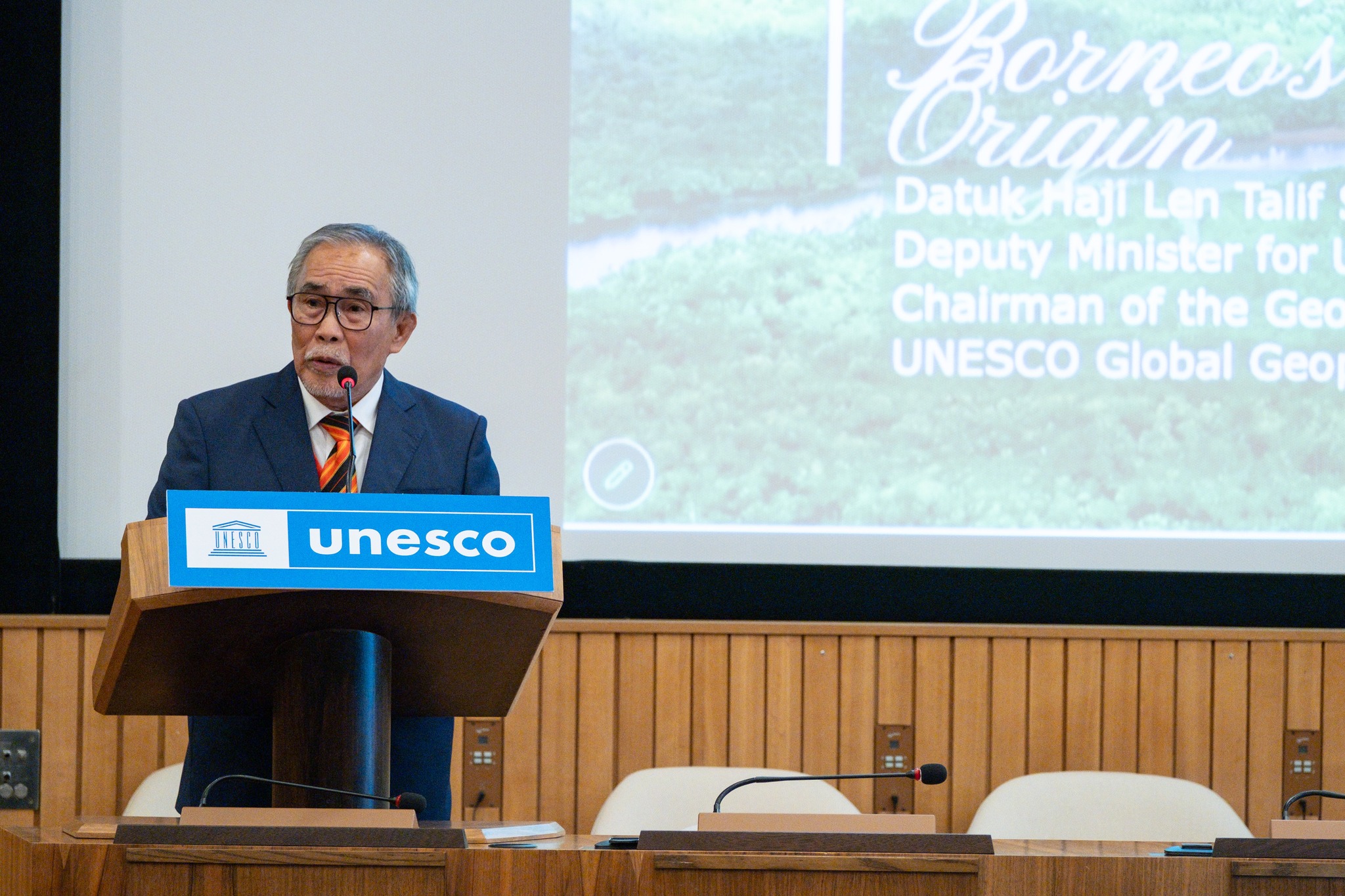
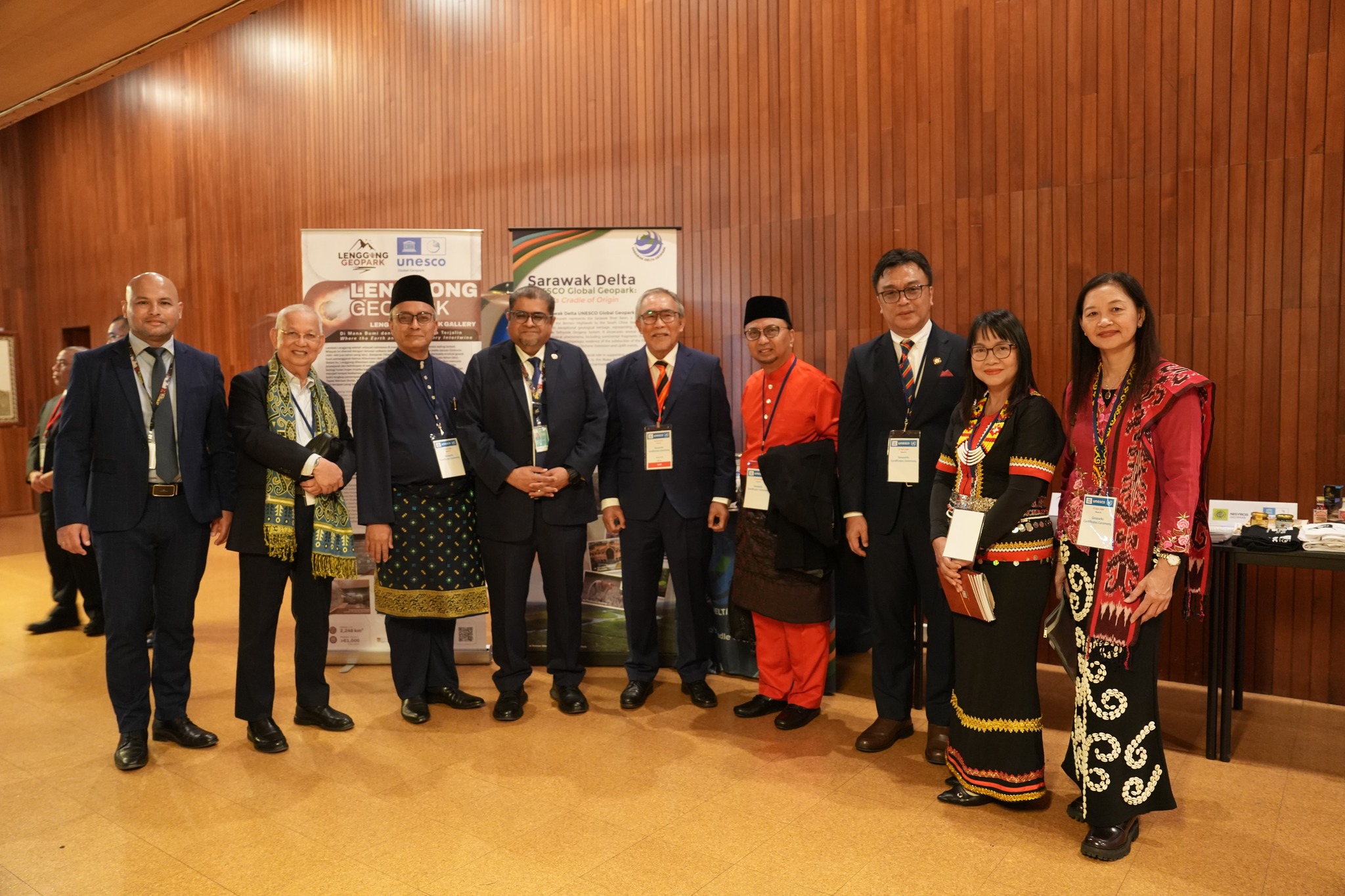
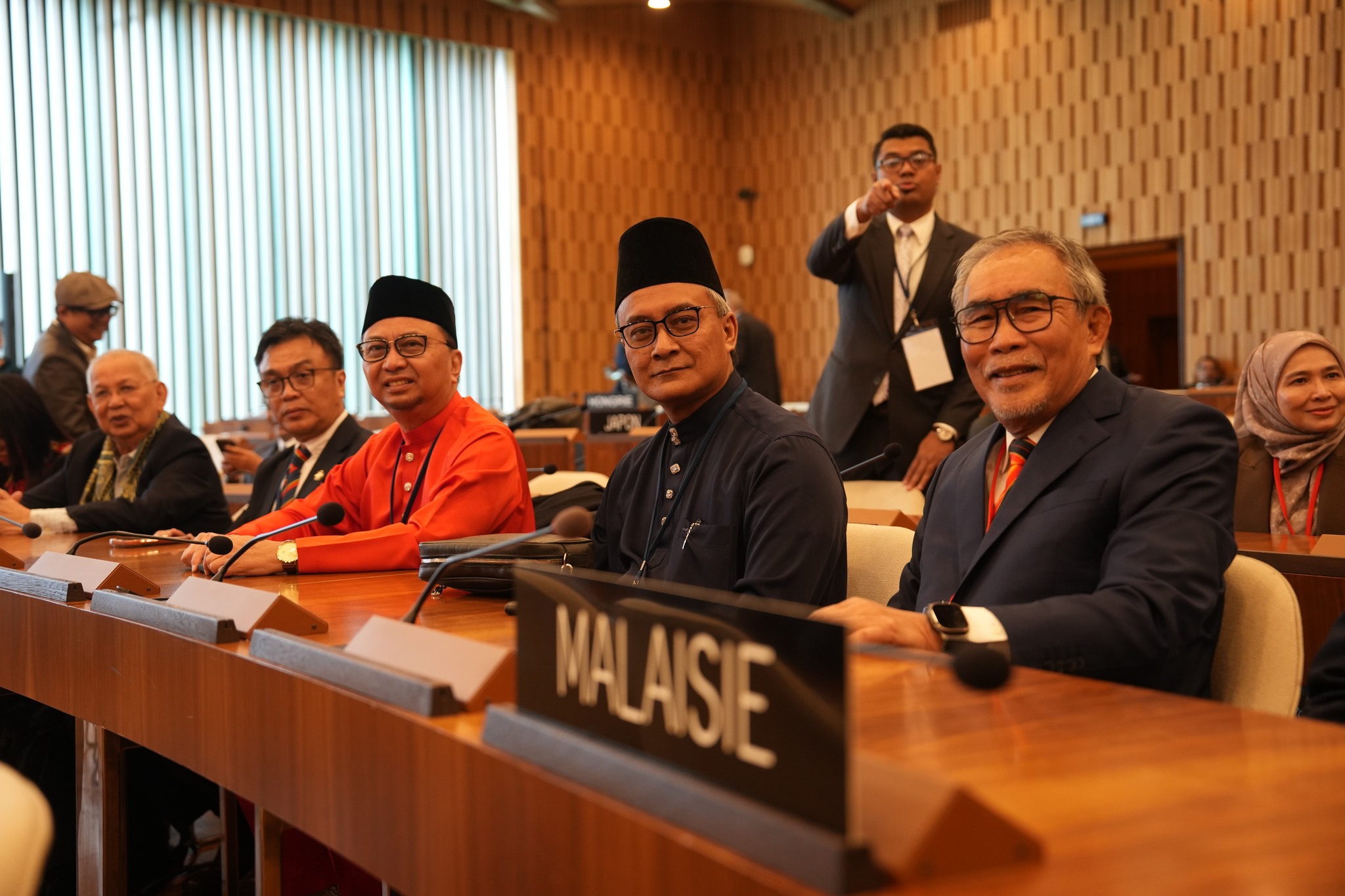
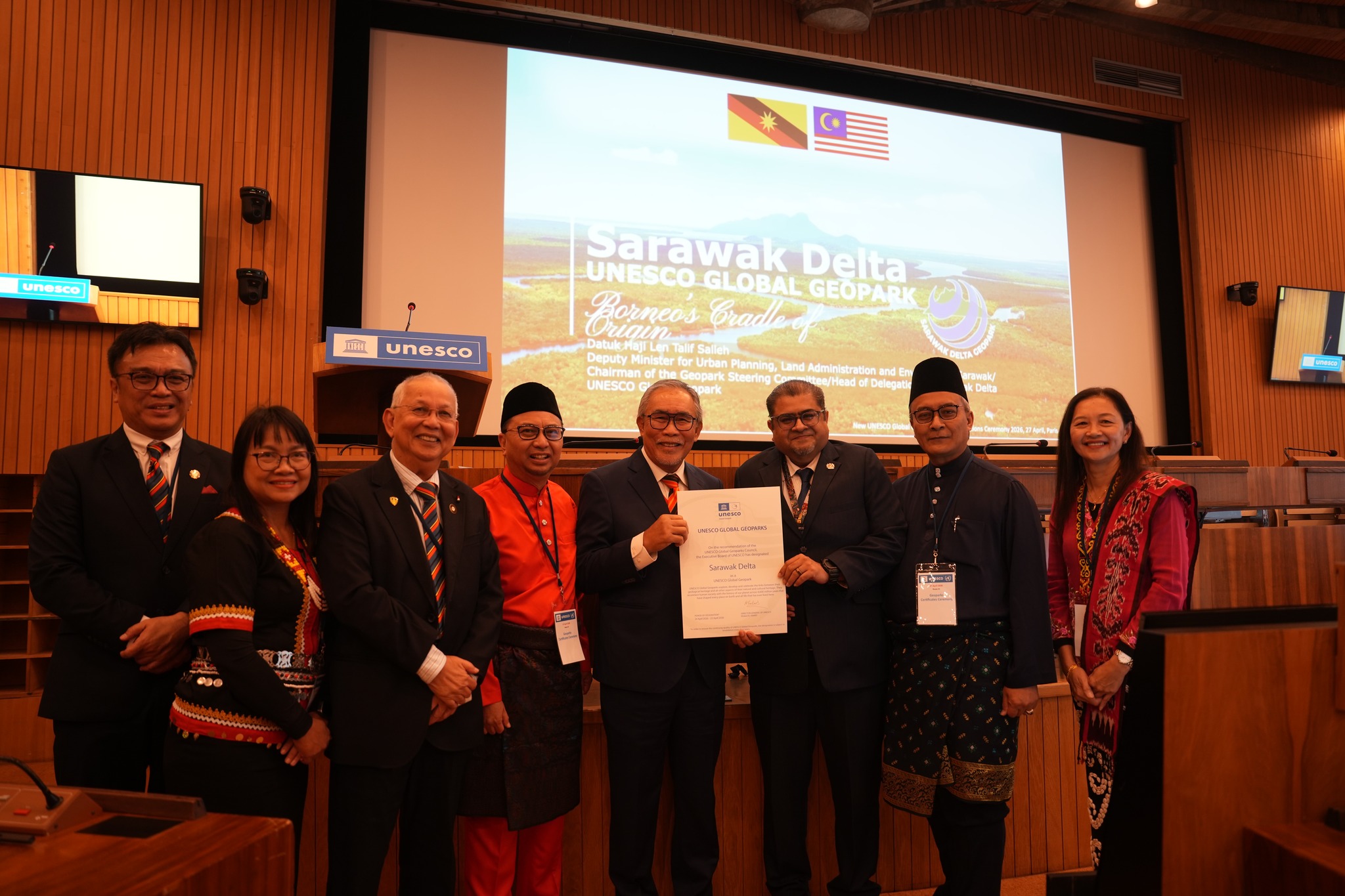
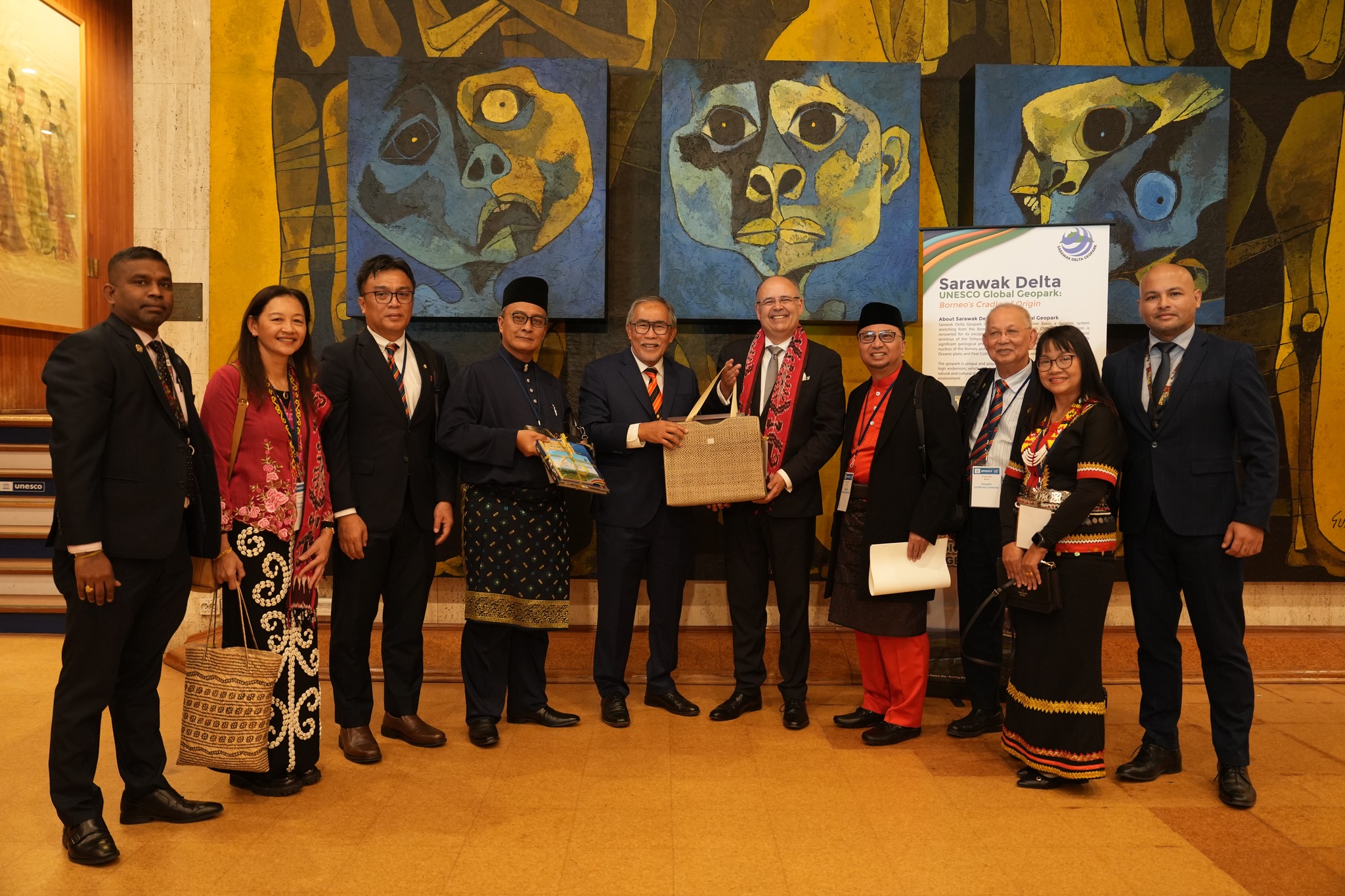
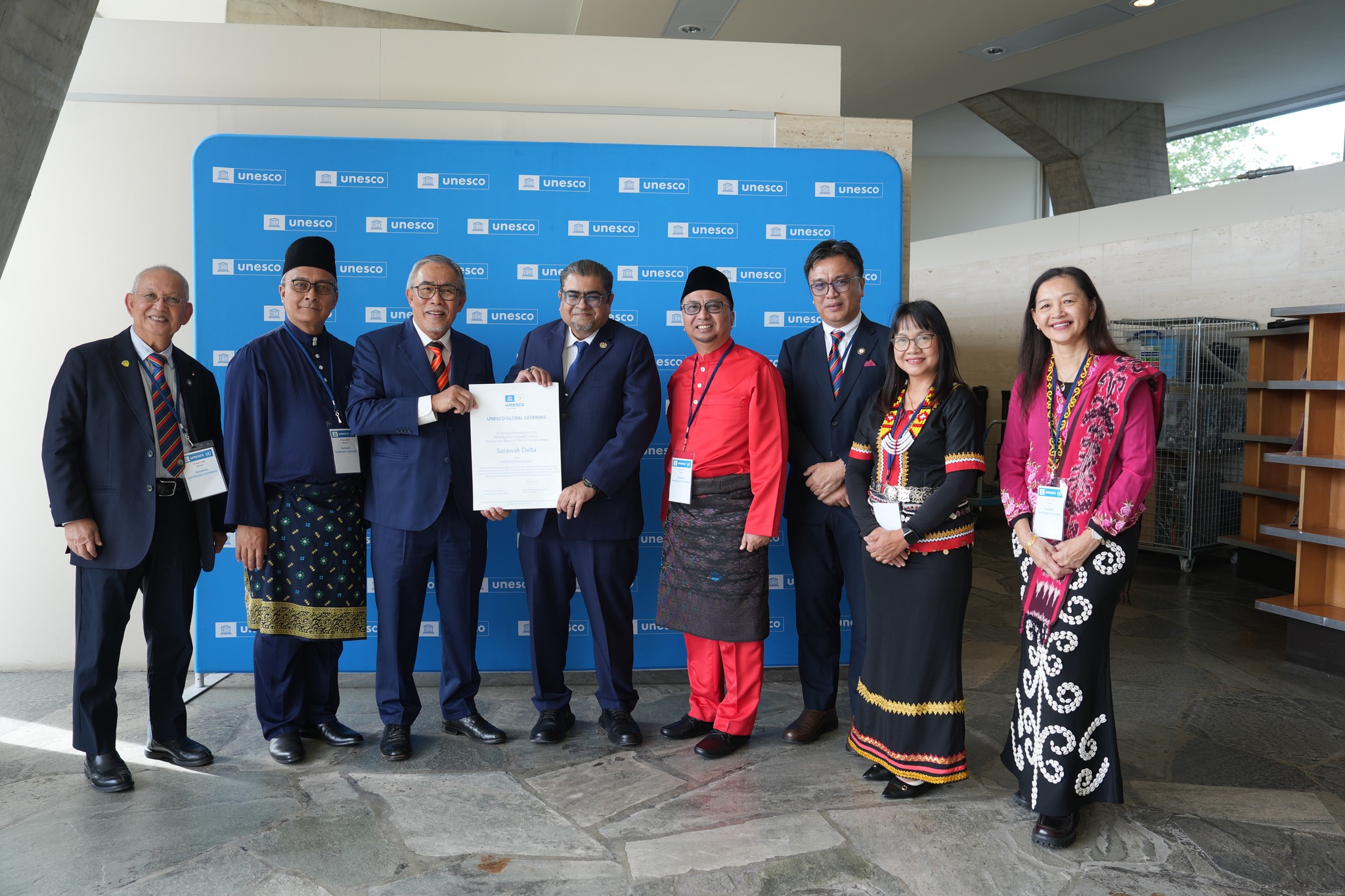
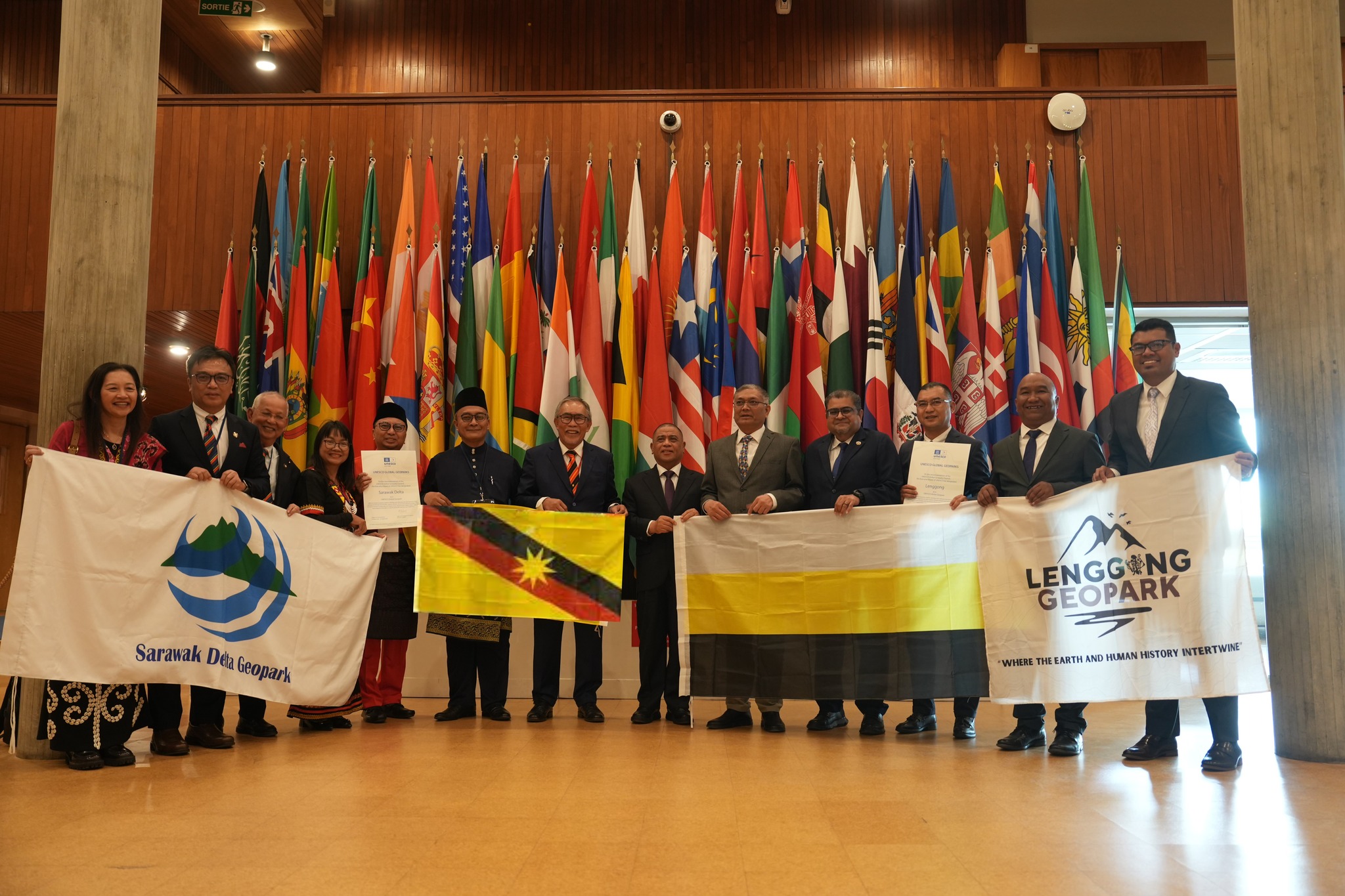
The official certificate was presented on 27 April 2026 at UNESCO headquarters in Paris. Sarawak’s delegation was led by Deputy Minister for Urban Planning, Land Administration and Environment, Len Talif Salleh, alongside senior representatives from key state agencies involved in conservation, forestry, and tourism.

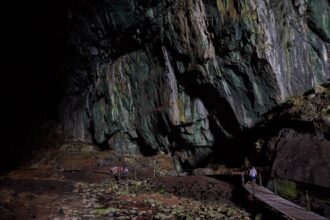
UNESCO Global Geoparks are defined as unified geographical areas where sites of international geological value are managed through an integrated approach that combines conservation, education, and sustainable economic development. The Sarawak Delta Geopark stands out for its complex river systems, coastal formations, and sedimentary structures that reflect millions of years of Earth’s history.
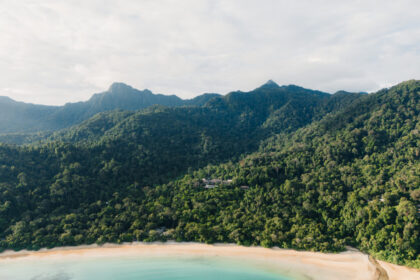
Beyond its geological features, the geopark supports diverse ecosystems, including mangrove forests, peat swamps, and estuarine habitats. These environments sustain a wide range of biodiversity while also supporting communities whose daily lives remain closely tied to the land and waterways.
This recognition reflects years of coordinated work between government bodies, researchers, and local communities. Their efforts have focused not only on protection, but also on building a model where conservation and development move in step.
With global recognition now secured, Sarawak is expected to see increased international interest. The geopark status is likely to strengthen eco-tourism, expand community-led initiatives, and encourage environmental education efforts across the region.
The designation also reinforces Sarawak’s broader direction towards sustainable development, positioning it as a regional destination for nature-based tourism and environmental stewardship.